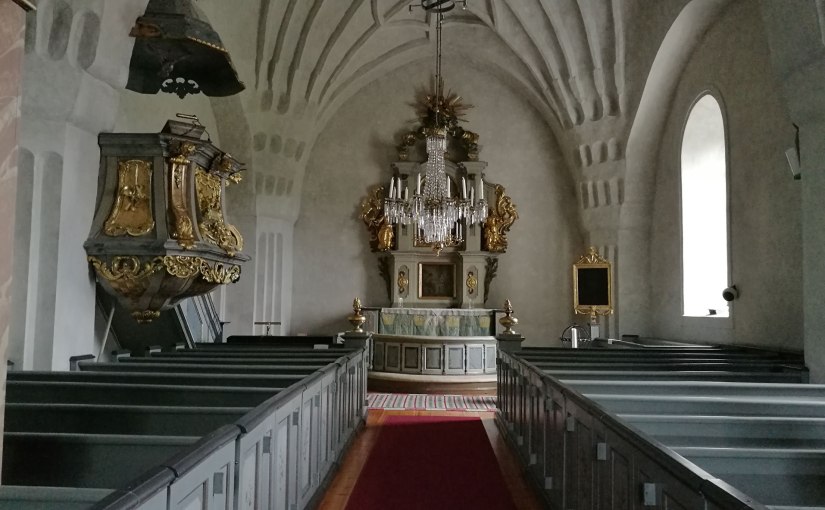
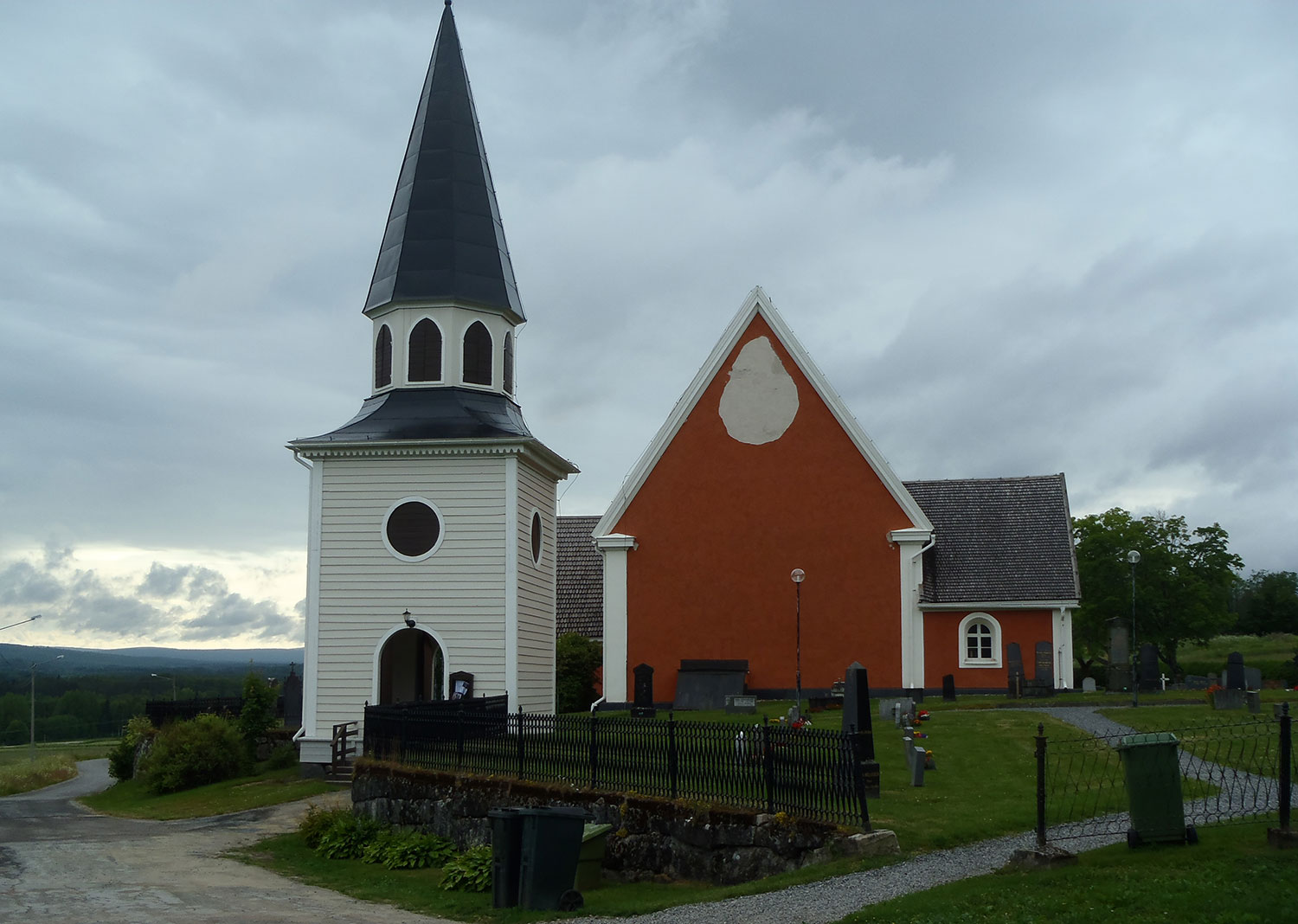
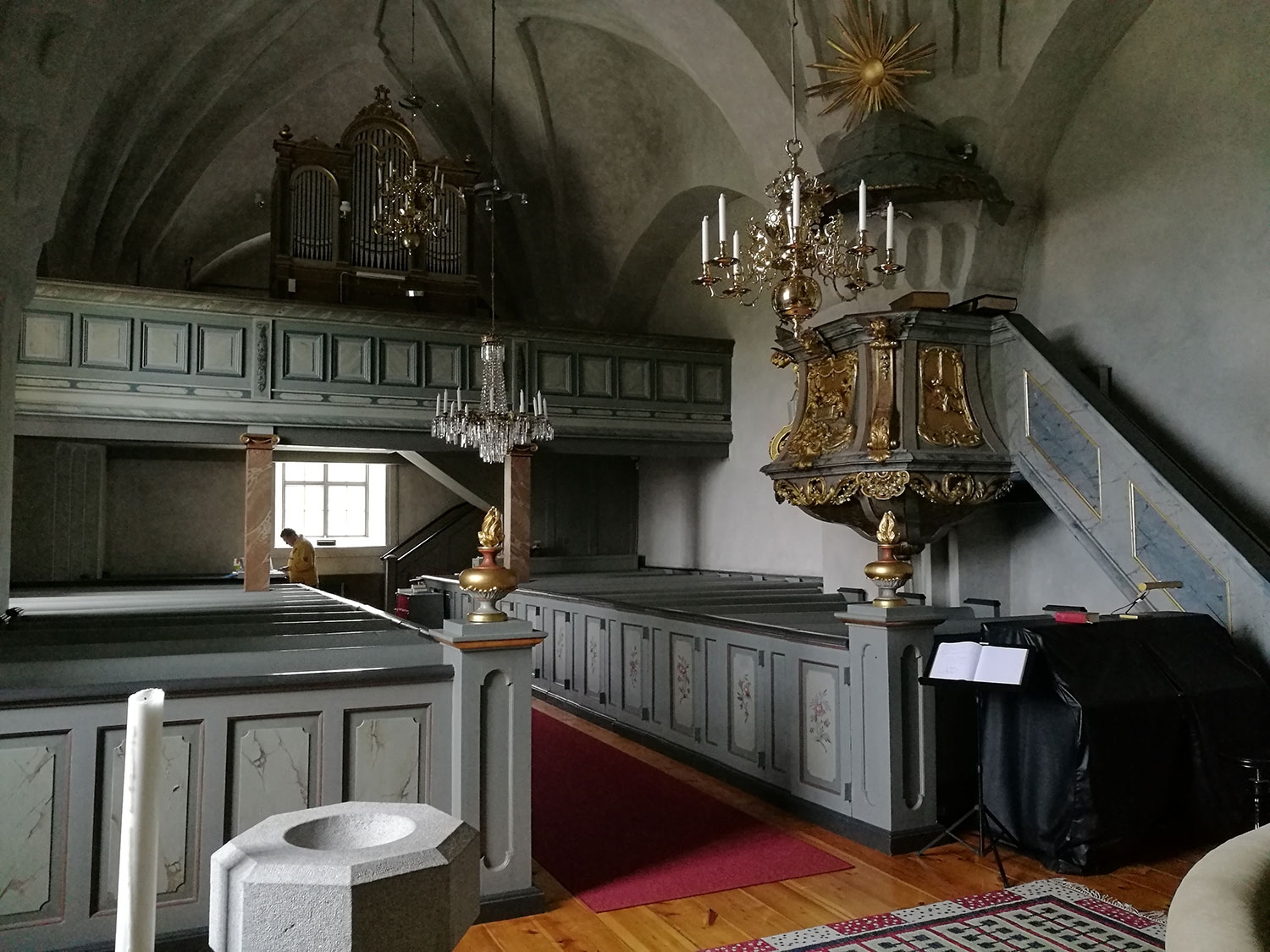
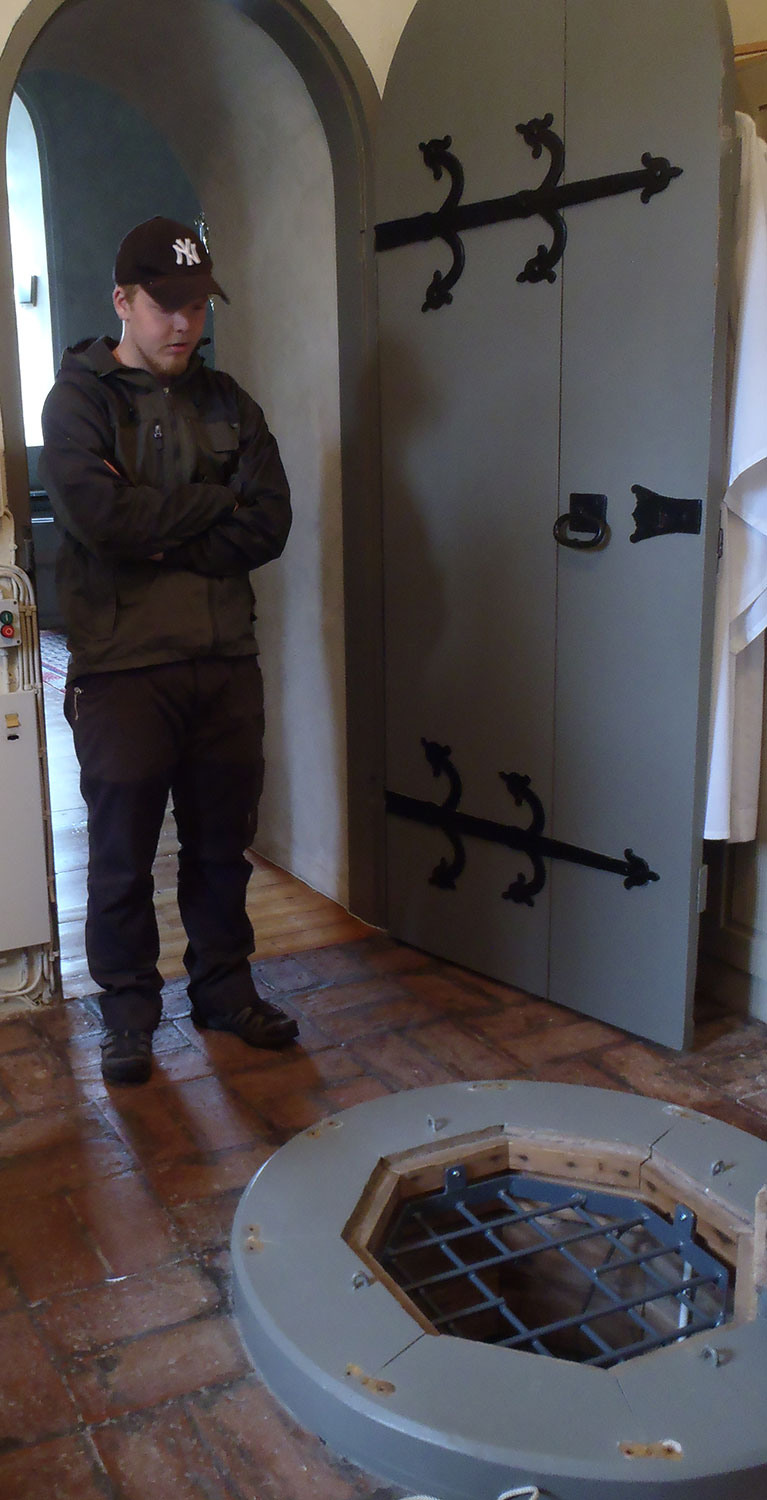
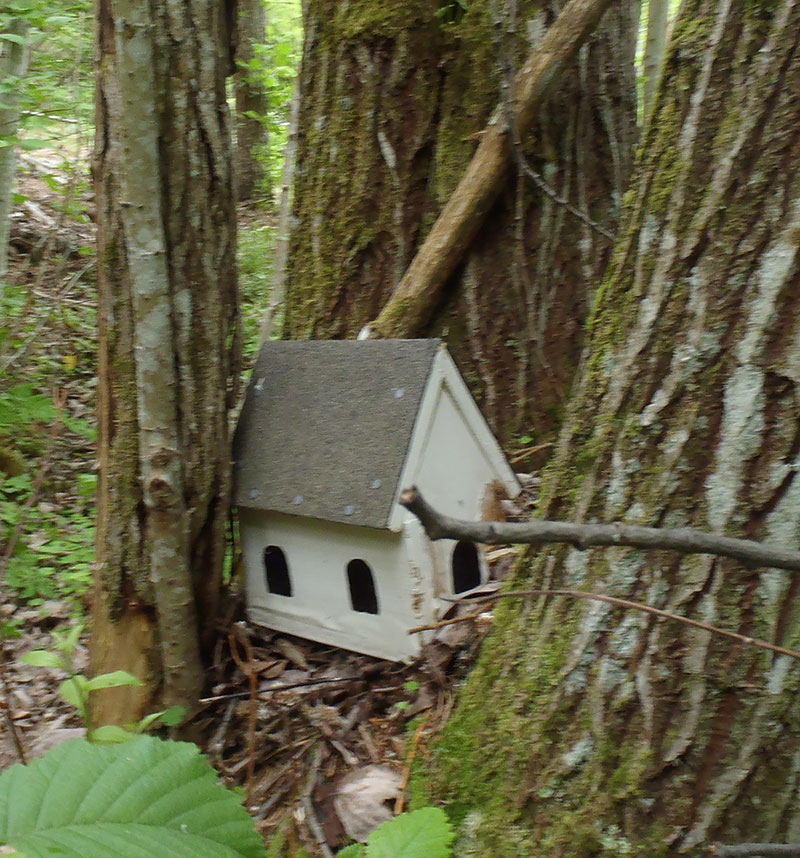
Geocaching-turen fortsatte. Vid Sånga kyrka skulle det finnas en geocache. Vi kom dit efter stängningstid men som tur var så var den unge kyrkvaktmästaren sen med nyckeln så vi kunde gå in och titta i kyrkan. Den byggdes på 1200- eller 1300-talet på platsen för det som en gång troligen var en hednisk offerkälla. Väl kristnad blev källan känd för sin hälsobringande effekt. Genom åren har kyrkan genomgått stora förändringar och källan har ömsom varit fördömd och igenmurad, ömsom öppen så att människor kunnat dricka vattnet och därigenom bli friska (i alla fall enligt olika berättelser). Tack vare den unge kyrkvaktmästaren fick vi se själva källan som ligger i kyrkans sakristia. Efter besöket hittade vi geocachen som låg mitt ute i skogen rätt långt från kyrkan. Även den en kyrka.
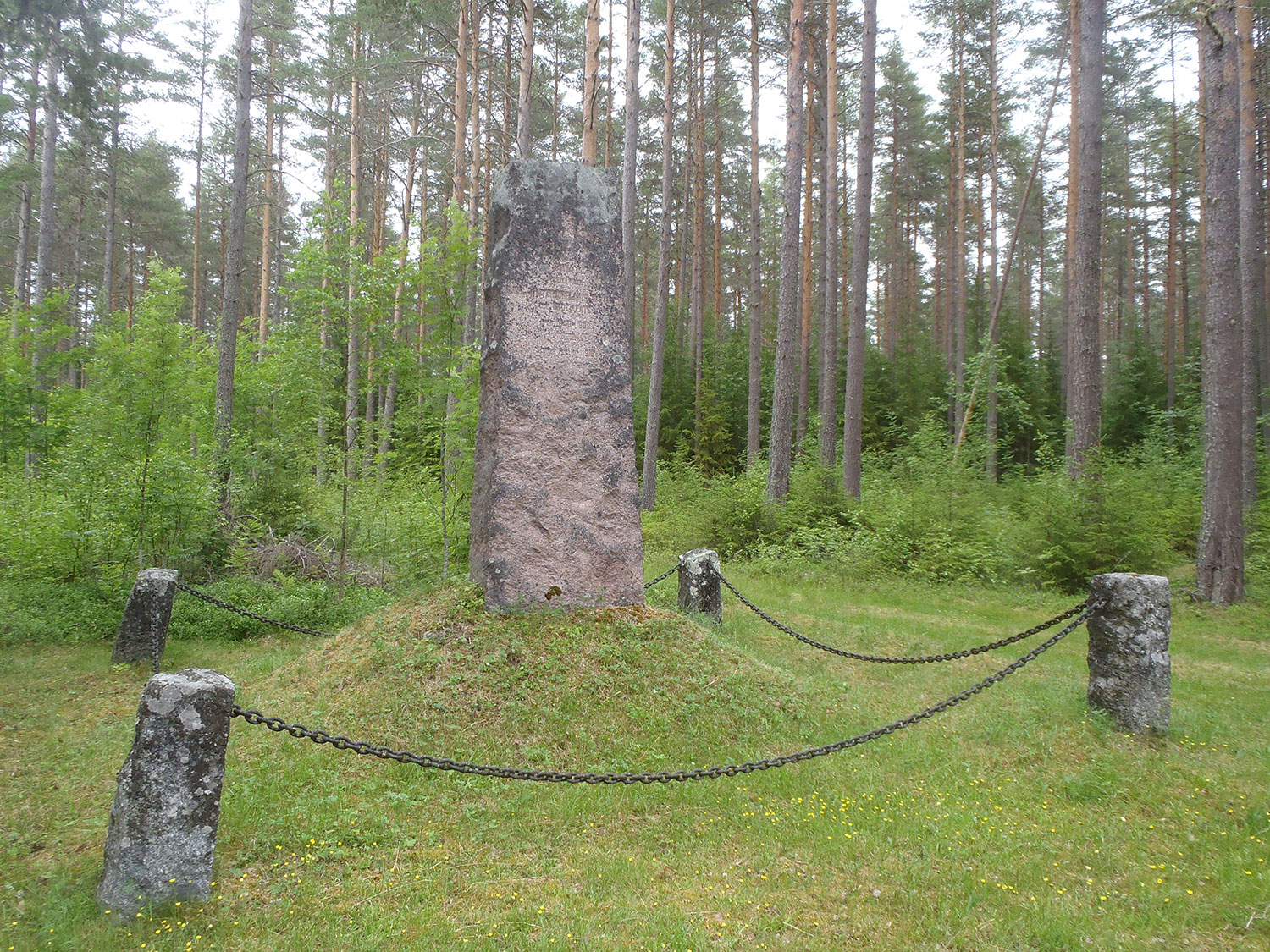
Därefter fortsatte vi till ytterligare en geocache, som fanns på Sånga Mo, Västernorrlands beväringsbataljon under 50 år på 1800-talet. Pampigt monument och massor med mygg mötte oss där.
The geocaching trip continued. At Sånga church there should be a geocache. We got there after closing time but luckily the young churchwarden was late with the key so we could go in and have a look at the church. It was built in the 1300th or 1400th century at the site of what once upon a time probably was a pagan sacrificial well. After christening, the well became known for its health-promoting effects. Over the years, the church has undergone major changes, and the well has alternately been condemned and blocked up, alternately open so that people have been able to drink the water and thereby become healthy (at least according to different stories). Thanks to the young churchwarden, we got to see the well itself in the Church’s sacristy. After the visit we found the geocache in the middle of the woods quite far from the church. It, too, a church.
Then we proceeded to another geocache, which was at Sånga Mo, Västernorrlands Conscript Soldier Battalion for 50 years in the 19th century. Big-time monument and lots of mosquitoes met us there.


 Sigges och Ylvas vanlighetsblogg 2.0